How to Teach Your Child to Ride a Balance Bike
Balance bikes have no pedals, because the most important skill in riding is balance and leaning into a turn — something tricycles and training wheels can't teach (and actually teach the opposite habit, which has to be "unlearned" later). Here's a simple 4-step guide to help your child stride with confidence.
4 steps to striding success
1. Adjust the bike to fit
Set the seat about 1 inch lower than your child's inseam — feet flat on the ground with a slight bend in the knee. Start the handlebar around belly-button height, then adjust for whatever feels most confident.
2. Support the child, not the bike
Resist the urge to hold the bike upright — if you do, your child learns that tipped-over is the stable position. If they need reassurance, walk beside them and hold the back of their shirt instead.
3. Let your child set the pace
Some kids just walk the bike between their legs at first — that's completely normal. Confidence builds as they start to "trust" the seat; some get there in minutes, others take weeks. Let them get there in their own time.
4. Be a cheerleader, not a coach
Praise every bit of progress, however small, instead of telling them what to do. Riding should be fun — use the activities below to practice through play, not instruction.
Safety gear
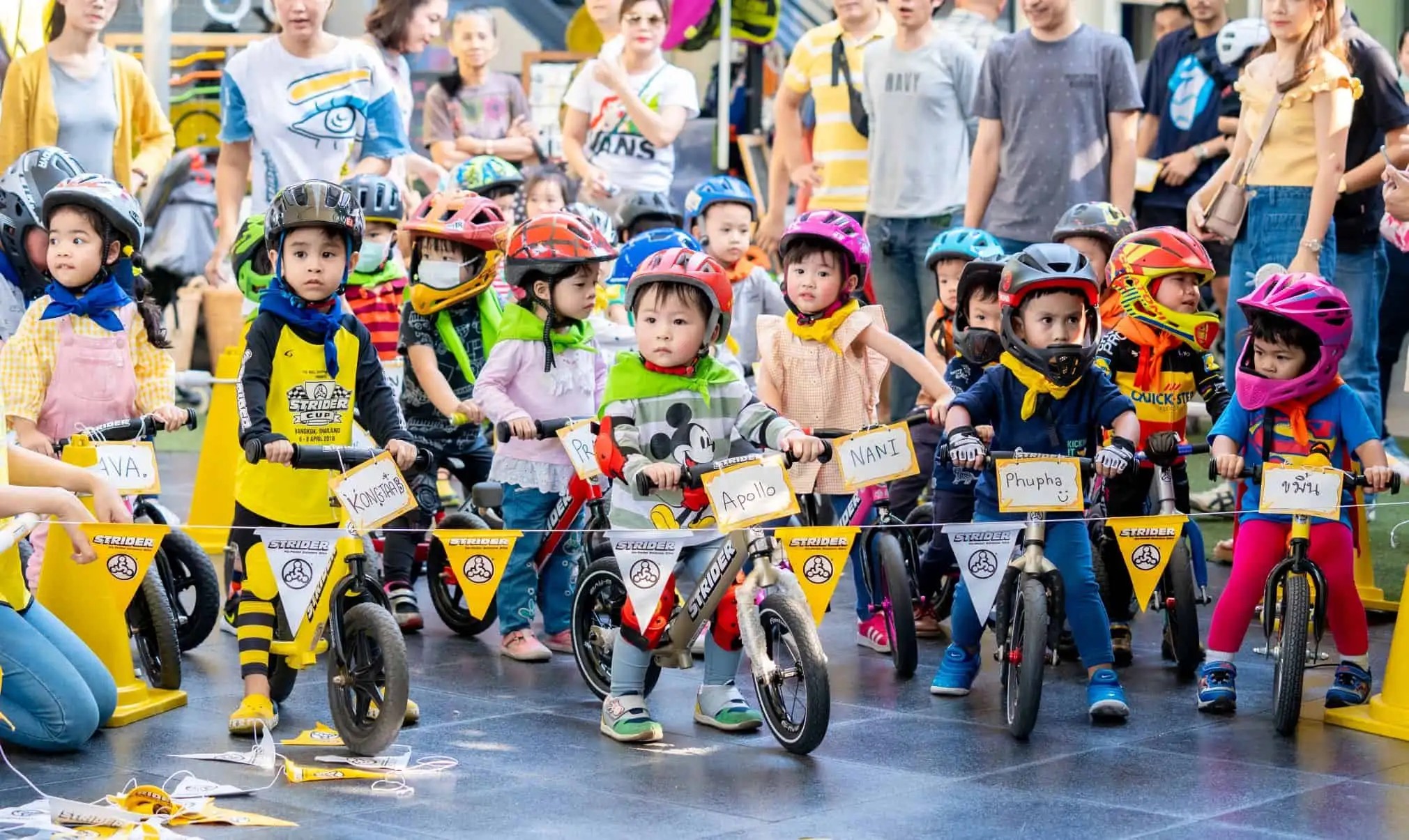
Adjust the helmet so it sits low, just above the eyebrows, and doesn't shift when you twist it gently. The chin strap should be snug but not tight, and closed-toe shoes are a must — they're your child's brakes! Lead by example and wear a helmet yourself too.
Why balance matters
Balance is the foundation of nearly every physical activity, and it builds these developmental skills at the same time:
- Attention & concentration
- Body awareness
- Bilateral integration
- Crossing the midline
- Hand-eye coordination
- Muscular strength & endurance
- Postural control
- Sensory processing
Signs your child is ready for pedals
- They can propel the bike and glide for long distances.
- They can handle a downhill slope without putting their feet down.
- They can steer around obstacles in their path.
- They want to transition to a pedal bike.
Don't rush it. Even if your child looks like a pro already, extra time spent balancing makes the eventual switch to pedals safer and easier.
Fun activities to practice together
Obstacle course
Set up boxes, tunnels, or homemade ramps and let your child show off their steering skills.
Simon says
Play it just like the classic game, but on the bike — a fun way to practice getting on and off.
Sleepy bear (animal game)
Have your child pretend to be different animals while riding — a sleepy bear stops to yawn, a cheetah goes as fast as it can.
Scavenger hunt
Give simple missions while riding — find a Y-shaped stick, or stride around 5 trees — to build balance in new terrain.
Walk the line
Draw a straight or curved line with sidewalk chalk and have your child try to stay on it while walking or striding.
The rocket game
Have your child run with the bike to gain speed, then count "3…2…1… blast off!" and encourage them to pick up their feet and coast.
← Still a baby? See the Rocking Bike guide for ages 6–18 months